Isozaki at Swissnex nexCafé 12
Shaping the Future of Global Fashion Business between Europe and Japan
Note. Consulate of Switzerland, Swissnex in Japan [Photograph].
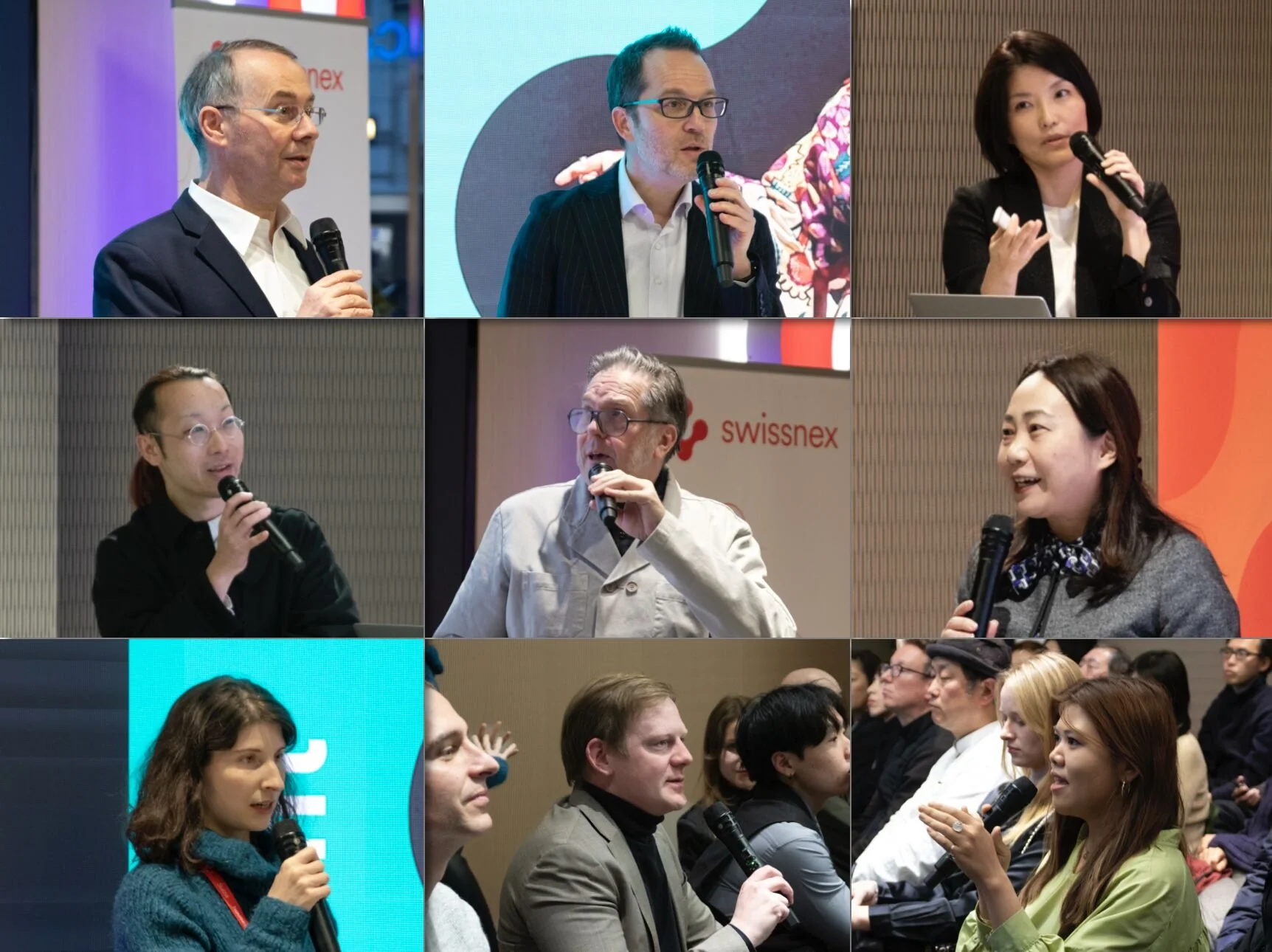
Yoko Isozaki (Ph.D in economics), Retail Consultant at LuxModa Consulting, was invited as a speaker at nexCafé 12 – Global Fashion Business, hosted by Consulate of Switzerland, Swissnex in Japan. Held as part of the Kansai Workshop on Global Fashion Business, the event brought together academics and industry professionals to explore how Europe–Japan exchanges are shaping the future of the global fashion industry.
From History to Contemporary Transformation
The evening opened with the book launch of Capitalism’s Favorite Child: Global Fashion Business since 1850, authored by
Professor Pierre-Yves Donzé (The University of Osaka)
Professor Ben Wubs (Erasmus University Rotterdam)
Their historical analysis highlighted how fashion became one of capitalism’s most dynamic global industries—providing essential context for the transformations currently underway.
Yoko Isozaki’s Talk
In her presentation, Yoko Isozaki shared a highly practical perspective. Isozaki began by clarifying a fundamental distinction:
Luxury is not fashion.
Luxury requires both capital and image—prime locations, carefully designed façades and interiors, and highly trained staff. In this context, the store is not merely a point of sale, but a communication device to customers and stakeholders. Referring to the Japanese concept fueki ryūkō (unchanging essence, changing expression), she argued that luxury must preserve its core identity while continuously adapting its expression.
Who Builds Global Luxury?
Isozaki contrasted two structural models in Europe:
France: Big Business
Large groups with capital market access, scalable retail systems, and strong organizational capabilities (Donze & Fujioka, 2018). Retail know-how is embedded in management systems.Italy: Niche Business
Small, family-owned companies with exceptional craftsmanship, flexible production, and limited series.
These structural differences imply different internationalization paths—especially when entering Asia (Isozaki & Donze, 2022).
Why Asia—and Why Japan Is Different
Asia’s rapid wealth creation has made luxury a social language of status, aspiration, and identity. However, Japan is a high-barrier luxury market, for three main reasons:
(1) Cultural and Institutional Structure
Japanese department stores remain deeply embedded in society and shape service excellence standards. Customers are extremely demanding—“good enough” is not even close enough.
(2) Channel Constraints
Unlike Hong Kong or Singapore’s “plug-and-play” luxury malls, Japan’s distribution system is more institutionalized.
(3) Cost Structure
Operating costs are high—not only financially, but relationally. Communication and relationship management with customers, staff, and department stores require continuous investment. Isozaki described Japan as a market famous for “mountains of failures”—even for well-known brands.
Luxury Is in the Distribution
One of the central arguments of her talk was: Luxury is not only about branding or design—”luxury is in the distribution” (Kapferer & Bastien, 2012). Execution determines success. A perfectly designed product will fail if it does not reach the right customers, in the right space, at the right time.
Department-Store Pop-Ups as a Bridge Strategy
Isozaki then presented a pragmatic entry model for niche brands. While large French groups can afford a flagship-first strategy as a classic playbook, this approach can financially damage smaller brands before success materializes. Instead, she proposed: Start with a department-store pop-up as an entry mode.
This strategy is mutually beneficial:
For the brand:
faster market access, and critical customer data collection.For the department store:
Assortment refreshment and early sensing of changing customer tastes.
What LuxModa Consulting Actually Does
Isozaki explained the operational side:
Negotiating with department stores
Managing logistics, staffing, and set-up
Coordinating local production of fixtures and interiors
Ensuring global brand consistency while enabling local adaptation
She stressed that local adaptation matters. In one case, strictly following the global VMD plan resulted in weak sales. However, adjusting display intensity and color strategies to align with customer segments—varying by department store and location—led to a significant improvement in results. This example illustrates that visual perfection according to global standards does not necessarily translate into commercial success.
Three Takeaways
Isozaki concluded with three clear messages:
Luxury globalization is a management and governance problem, not just a branding exercise.
Japan rewards excellence—but significantly raises the bar.
For niche brands, department-store pop-ups serve as a strategic bridge toward full market entry and a permanent presence.
Additional Expert Perspectives
Sustainability Regulation and Strategic Response
Rika Fujioka, PhD, Professor at the University of Tokyo, examined the implications of emerging EU Ecodesign regulations for Japanese fashion companies. Her presentation highlighted that sustainability regulation is no longer merely a compliance issue but a strategic one. For Japanese firms, this means that competitive advantage will increasingly depend not only on firm-level measures, but on capabilities spanning the entire supply chain.
Japanese Consumer Perceptions of Ethical Fashion
Kazuki Ide, RPh, MFA, MSc, PhD, Specially Appointed Associate Professor at The University of Osaka, Center for Infectious Disease Education and Research (CiDER), and Research Center on Ethical, Legal and Social Issues, presented insights into how Japanese consumers perceive ethical and sustainable fashion. For further details, readers are encouraged to consult his recent publications:
Ide, K., & Kishimoto, A. (2026). Perceptions of ethical and sustainable fashion in Japan: A questionnaire survey. Journal of Arts, Humanities and Social Science.
井出和希 (2023). 「ラグジュアリーファッションビジネスにおける『倫理』への訴求:探索的事例検討」 ELSI NOTE, No. 27.
井出和希・桐惇史 (2024). 「ファッションビジネスにおける『倫理』と語り:事例検討および質問紙調査」 ELSI NOTE, No. 46.
Dynamic Discussion with Participants
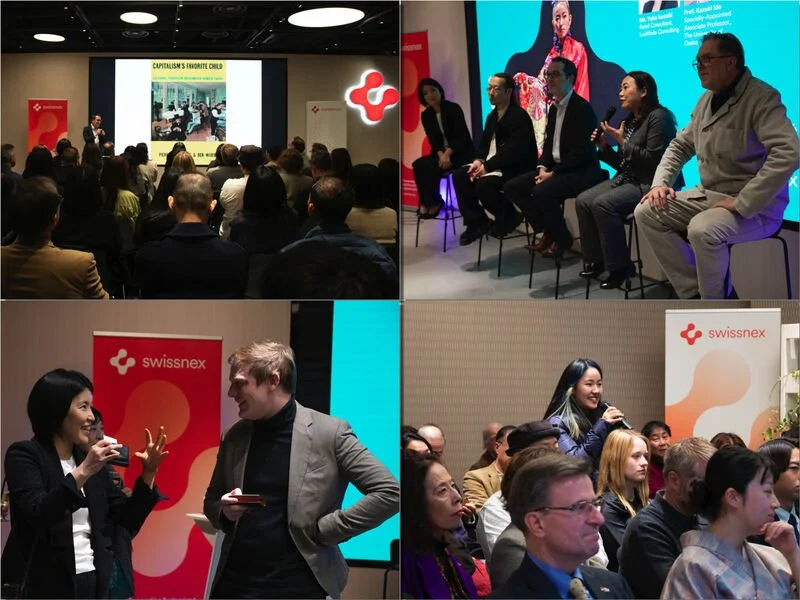
Following the presentation, speakers engaged in an active discussion with academics and industry professionals. The dialogue addressed:
How firms can manage a tension between sustainability features (restraints and efficiency) and luxury attributes (creativity and dream aspects)
Future outlooks of luxury industry: tension between French group structures and Italian craftmanship
Note. Consulate of Switzerland, Swissnex in Japan [Photograph].
Bridging Europe and Japan
LuxModa Consulting specializes in supporting European niche brands entering the Japanese market, combining global strategy with local execution and data-driven market insights. Participation in nexCafé 12 reflects the firm’s ongoing commitment to fostering international dialogue between academic research and industry practice—strengthening Europe–Japan collaboration in luxury and fashion business.
Looking Ahead
As global fashion faces transformation driven by sustainability, digitalization, geopolitical realignment, and changing consumer behavior, cross-border dialogue becomes increasingly essential. LuxModa Consulting remains dedicated to contributing analytical clarity and strategic insight to this evolving landscape—bridging theory and practice across Europe and Japan.
References
Donzé, P.-Y., & Fujioka, R. (2018). Global luxury: Organizational change and emerging markets since the 1970s. Palgrave Macmillan.
Isozaki, Y., & Donzé, P.-Y. (2022). Dominance versus collaboration models: French and Italian luxury fashion brands in Japan. Journal of Global Fashion Marketing, 13(4), 394–408. https://doi.org/10.1080/20932685.2022.2085596
Kapferer, J.-N., & Bastien, V. (2012). The luxury strategy: Break the rules of marketing to build luxury brands (2nd ed.). Kogan Page.